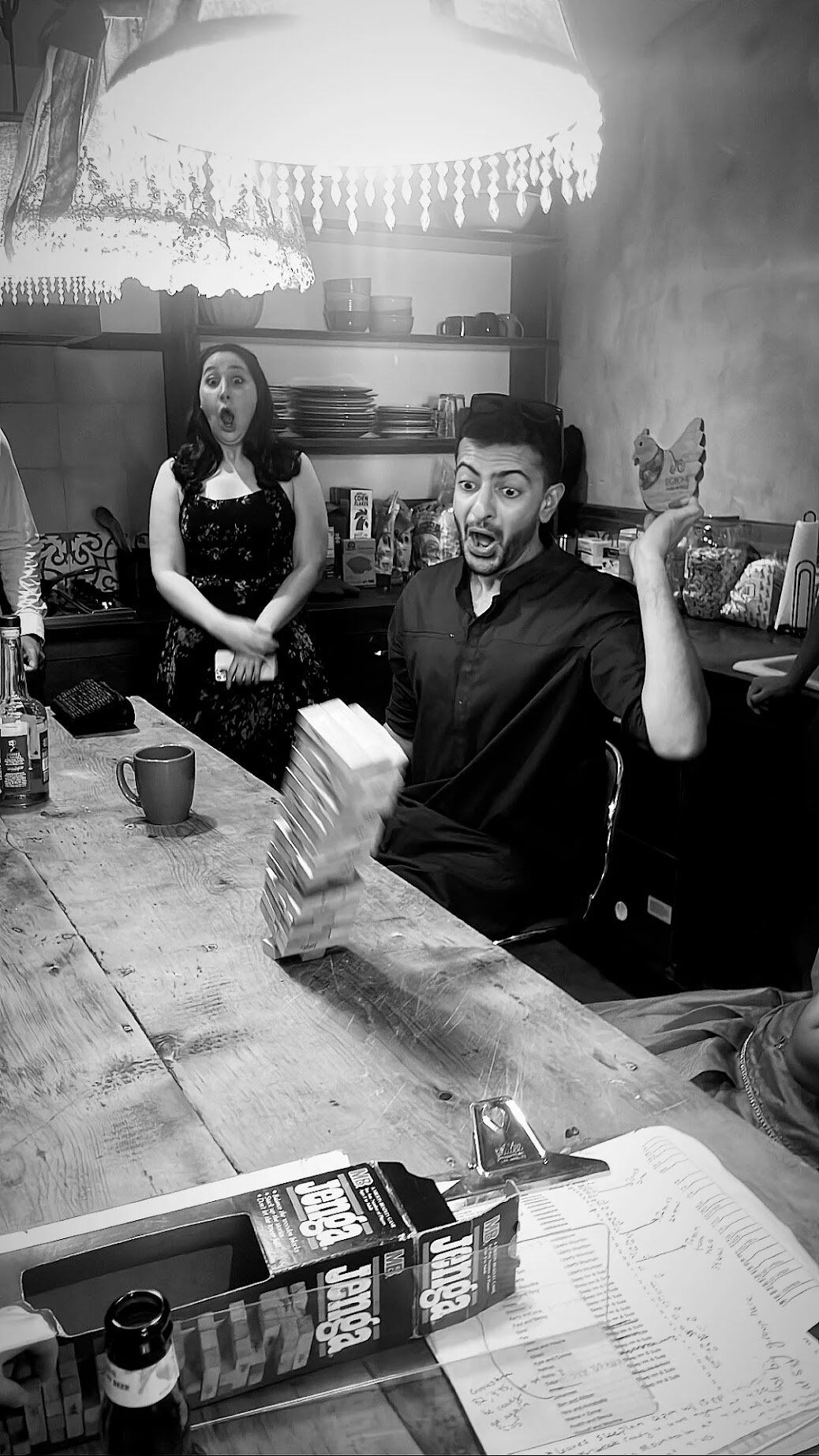
About

Mostly, I'm curious about people

How I got here

I started in engineering. Industrial and operations, all formulas and optimization, where everyone applied the same method and got the same answer. It left me cold. No room in it for a why, or for a person.

Then I wandered into design, and the work turned into watching real people. How students used the ATMs on campus. Which gadgets pulled a driver's eyes off the road: an old iPod, a touchscreen, a keyboard. Small things, but a few seconds or a few glances decided whether a line kept moving or whether someone got home safe. Same problems as before, but now the answer depended on the person, and there was a creative way to solve each one.

What I do now is the balance of all three: the structure of an engineer, the creativity of a designer, and the human focus of HCI. Luckily, I get to use all three at once, because the products that grow too complicated to fix need every one of them.

Ghazi Khan

FoundationsWhere the thread started

Before any of it was a job, I chased the same instinct, people, data, and systems, just for the love of the problem.

EA Sports · FIFA
Volunteer
I played so much FIFA that I volunteered to analyze real athlete data and help make the game feel truer to life.
Comcast
School project
Redesigned a clunky phone-support system and cut call times by more than 20%.
University of Michigan
Research · 2006–2010
Studied how people really use everyday machines, from campus ATMs to in-car touchscreens, and designed for how they actually behave, not how the manual assumes.

Beyond the workBeing human

What makes us human, and what makes each of us unique, is the thing I keep circling. Philosophy, psychology, anthropology, sociology, and travel are different ways into the same question: why do people do what they do? Some of the best ideas about connection, simplicity, and care don't come from tech at all. They come from paying attention to people, and that helps as much with the teams I work alongside as with the people I design for.

It feels more important now, not less. AI is a powerful tool, and what matters is using it consciously and precisely, on the right problem, not just fast. The real edge is stepping back to see the whole picture, and to ask the basic questions again, about ethics, about empathy, about what we owe the person on the other side. Stay curious about people, and the rest tends to follow.

On my mindWhat I'm exploring now

Designing the AI collaboration

Setting up and directing AI as real design work, so it takes on the draining, time-consuming parts and gives back time and energy for the work worth doing. Read the field notes →

The right question, at the right time

Asking the right question, or reframing the problem, is often worth more than a fast answer. It is personal, it is unique, and it is where the real work starts. See how I work →

Mentorship as the right context, not more information

Growing designers by surfacing the right information at the right moment, with the why behind a decision instead of an overload, then naming the growth areas and letting people choose how they grow.

On InstagramA more personal window

A few frames from outside the work.

Let's talk

Open to senior, lead, staff, and principal design roles, especially at AI and enterprise companies.

Email me LinkedIn