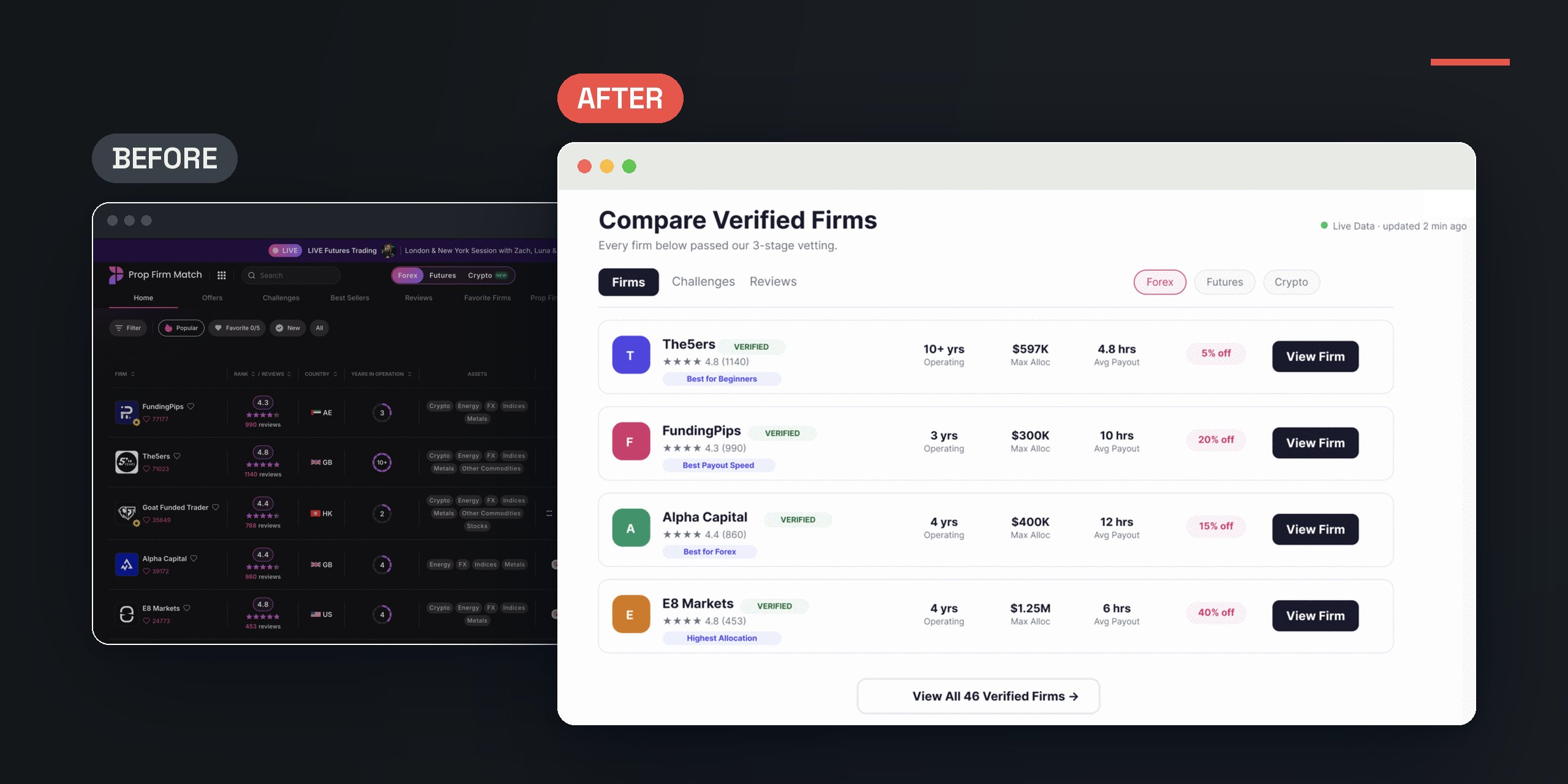
I designed the AI collaboration itself like a product: a full UX engagement in three days, with the rigor intact.
How much of a real UX engagement can one designer produce in three days with AI, without sacrificing the process that makes design defensible?
Design Lead. The AI proposed, I decided. I set direction, owned the quality bar, and logged the reasoning behind every call.
A reusable operating model for human-AI design, plus a redesign anchored on a single insight the process surfaced: trust inversion.
Before any wireframe, a 3,000-word operating brief: roles, phase gates, accountability, and built-in disagreement. The highest-leverage artifact in the project.
Five specialist lenses with distinct points of view, structured to create tension. The central insight came from that tension, not from me.
Assumption-versus-evidence tracking, a five-dimension trust score, and AI-transparency logging from day one, so speed never outran judgment.
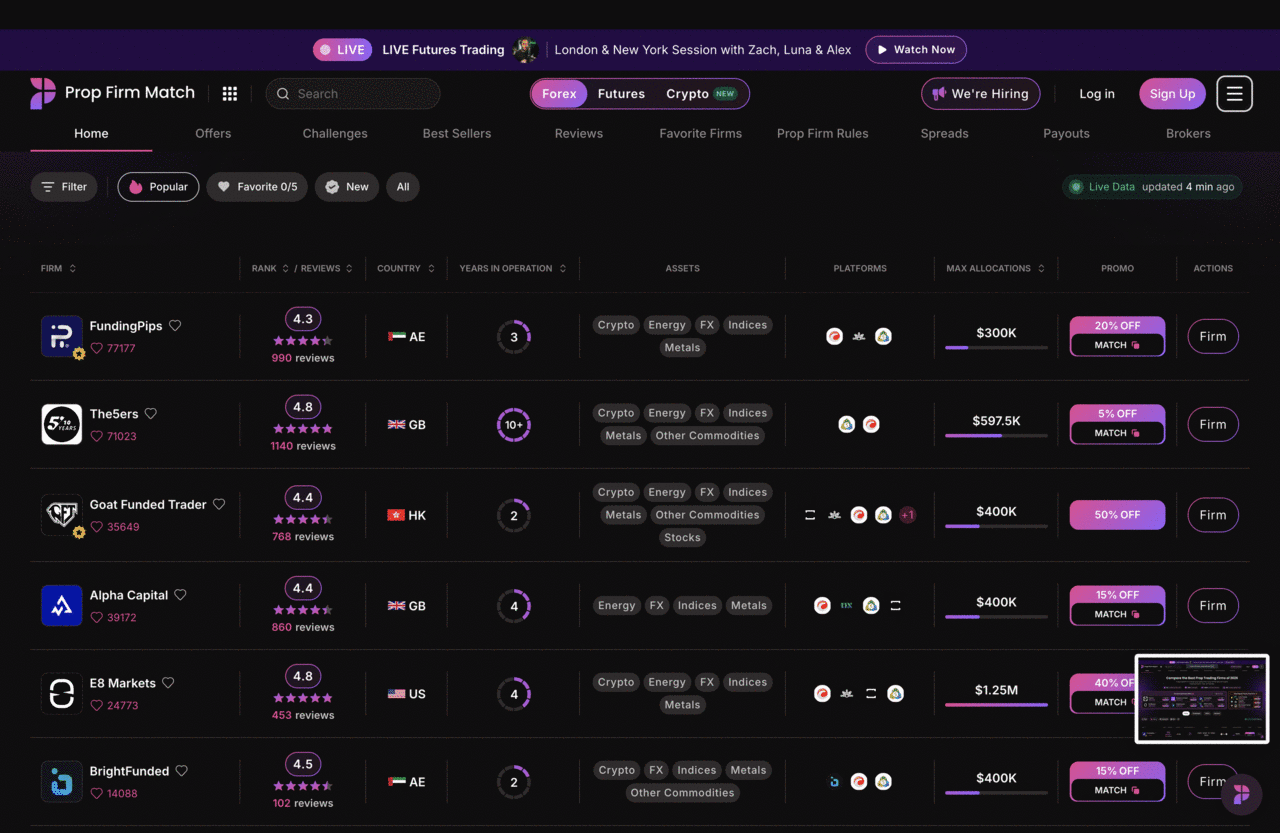
The process surfaced one insight that reframed the whole redesign. The homepage led with promotions when its real moat was a 6% vetting rate. I restructured the page around trust before transaction, earning the right to each section. I named the pattern trust inversion.

The 6% vetting signal moves to the top, and the page earns the right to each section before it sells.
I gave myself a constraint to test a real idea: how much of a full UX engagement can one designer produce in three days when using AI as a genuine collaborator, not just for polish, but for the heavy lifting of research synthesis, structural thinking, and production?
I did not want a toy problem. I picked a real subject with a real business model: a leading platform that helps traders find and evaluate proprietary trading firms, whose entire value rests on a rigorous vetting process where only 6% of firms that apply get approved.
The honest framing matters, so I will be clear: this was a self-initiated project, not a paid engagement for that company. The three-day clock was the stress test. The operating model underneath it is how I would structure any team taking on this kind of problem.
Most people use AI like a search engine. Ask a question, take the answer, move on. Design does not work that way. Design needs pushback, competing perspectives, and structured tension. Working alone, you get none of that. You make a call, move on, and hope your instinct was right. I wanted to build the room I did not have. So I started from a hypothesis: what if you designed the AI collaboration itself with the same rigor you would bring to a product? Not a single clever prompt, but an operating system. Roles with distinct lenses. Phase gates. Accountability mechanisms. Built-in disagreement. That hypothesis became a 3,000 word brief, and it changed everything the AI produced downstream.
I did not brief the AI and turn it loose. I asked it to keep questioning me as we went, to raise the hard questions and push back, so it worked as a sounding board rather than an order-taker. My assumptions got tested before they hardened into decisions.
I ran the work as a roundtable of five specialist lenses, each an AI role I directed, each with a job and a point of view: a UX researcher pushing on what we knew versus assumed, an information architect on structure and scalability, a UX and UI designer on hierarchy and a financial-grade standard, a conversion strategist on the trader's path, and a product strategist playing devil's advocate on the business.
The most important finding of the whole redesign did not come from me handing down a directive. It emerged from the friction. The conversion strategist flagged that the homepage led with promotions. The researcher tied that to trader psychology and the need for trust before transaction. The product strategist asked why the platform's 6% vetting rate, its single strongest signal, was buried. I named the pattern "trust inversion" and made the call to restructure around it, but the diagnosis came from the back and forth. No single voice would have reached it alone. Trust before transaction is a hypothesis, not a finding. In a real engagement it is the first thing I would put in front of traders.
It also held the busywork to a single standard: the file, handoff, and logging consistency a whole design org usually can't keep. That freed my attention for the calls that needed judgment, and the same discipline scales from one designer to a team.
The hard part was not naming trust inversion. It was acting on it. The conversion lens, the one I had deliberately built into the room to protect clicks, made a real case for leading with promotions, and on a self-initiated project there was no client demanding I take the harder path. I overrode it anyway.
Surfacing the 6% vetting rate first meant giving up the easy first-scroll conversions, and it meant trusting my own standard over the internal logic of a system I had designed to push back on me. That is the actual skill the whole project was testing: knowing which pushback to absorb and which to overrule. A second perspective makes the work sharper, but someone still has to own the call.
AI was weakest exactly where taste and spatial judgment mattered most. Wireframe annotations needed several manual passes because the model could not see when callouts overlapped or hierarchy broke. The roundtable sometimes produced agreement where a real team would have fought harder. And I underestimated the quality-control tax: reviewing, redirecting, and rejecting AI output is real work that never shows up in the deliverables.
The full process lives in a 16-slide interactive prototype, from personas and competitive audit through to annotated wireframes for desktop and mobile, plus a navigation concept with mega-menu states.
The skill was never rushing to the answer. It was building a system that adds perspectives, surfaces the right questions, and challenges your thinking before it hardens into a design. Not to slow the work down, but to make it more considered.