Unifying 12 legacy systems into one platform, so 19,750+ GM advisors and dealers can see the whole case and trust the next step.
Advisors juggled a dozen disconnected systems, acting as the human bridge between siloed customer, vehicle, and case data.
Lead Experience Architect and the design owner across a multi-year program. Led the design team, and led Case 360, the guided workflows, and the dealer portal end to end.
Shipped a zero-disruption migration off a 20-year-old legacy CRM to 19,750+ users.
One chronological place that ended the broken hand-off, so customers never repeat their story.
Advisors used to pick the right workflow from memory. Now the system recommends the next step and shows why, and the advisor stays in control.
Connected dealers to the advisor platform, so a case handed to GM no longer disappeared.
A customer calls, anxious, sometimes mid-emergency, and the advisor who picks up is supposed to be the calm expert. Instead they are opening four browser tabs just to check whether the car is under warranty, asking the customer to repeat their story while a 20-year-old system loads. That was the daily reality for thousands of GM advisors, and it was a symptom of something deeper.
GM's homegrown CRM sat at the center of a dozen disconnected systems advisors had to juggle, and it had grown too brittle to evolve. Minor updates took months, and fragmented workflows quietly degraded both the employee and the customer experience. Between 2022 and 2026, I served as Lead Experience Architect to replace that legacy foundation with one platform. Today it powers millions of global customer interactions.
I was the Lead Experience Architect on the transformation and, across its multi-year span, the design through-line while the team scaled and rotated. I led the design of the platform's core advisor experiences end to end: the case workspace, the guided workflows, and the dealer portal. I led the design team across the program and mentored the designers doing the work. Alongside that, I helped shape the foundations the whole program rested on: the discovery research, the information architecture, and the five design principles. I partnered across the wider platform from discovery through global rollout.
I anchored the work in the uncertainty, the desire to reassure, and the fear of losing trust that sits beneath every service call. Observation reveals what people cannot always articulate in an interview.
26 interviews with stakeholders and advisors, 20+ hours of live call shadowing across three call centers, and full audits of tools, systems, and CTI environments.
Workshops with supervisors, QA, knowledge management, and training. End-to-end mapping of 100+ workflows and sessions with advisors to design their ideal experience.
A two-week sprint rhythm: requirements in week one, working prototypes reviewed with advisors, business stakeholders, and engineering partners in early week two, then tweaked to final sign-off.
I turned each of these into a "how might we," reframing the pain as an opportunity, then into five design principles aligned across product, operations, engineering, and design, framed around how we wanted the advisor to feel.
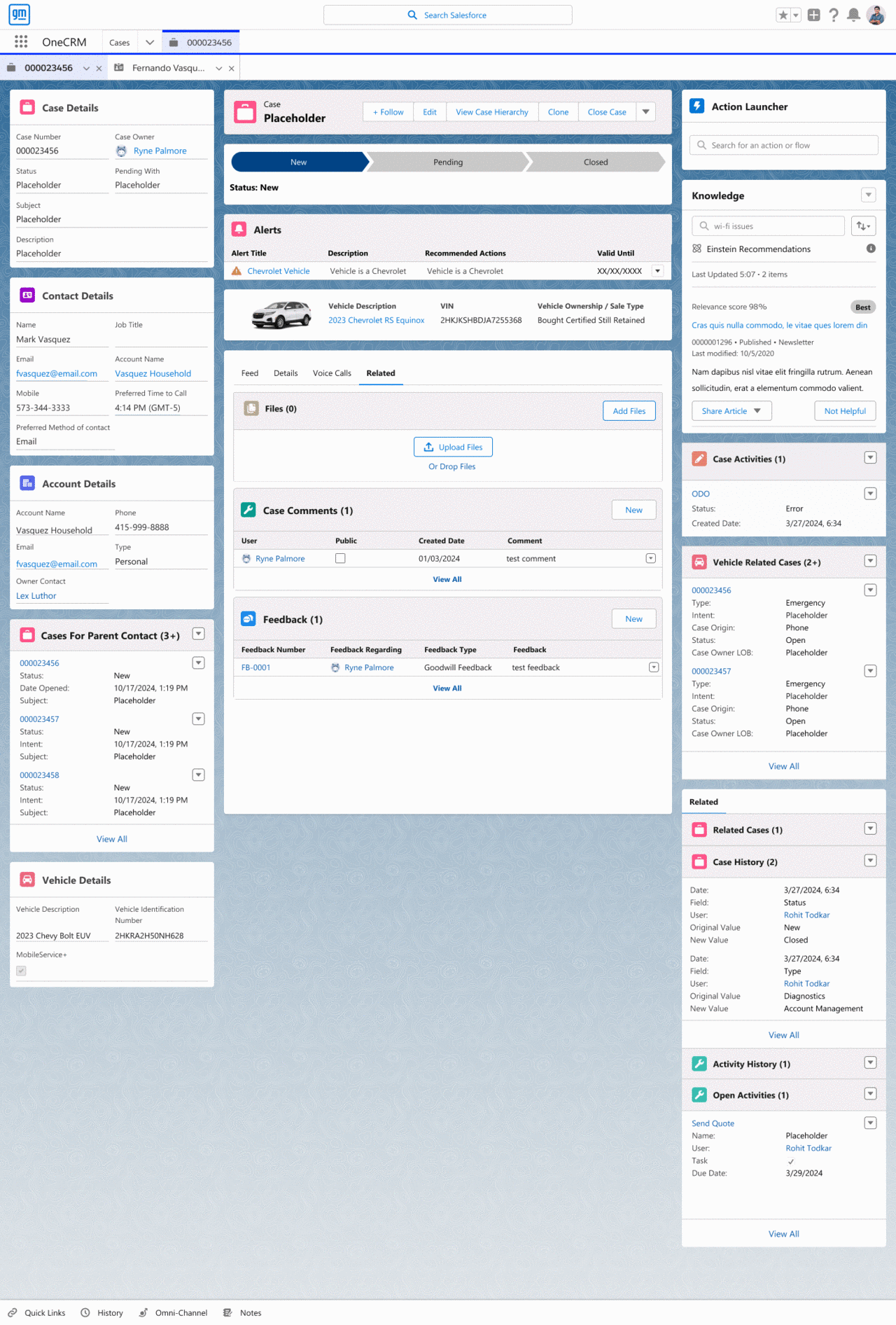
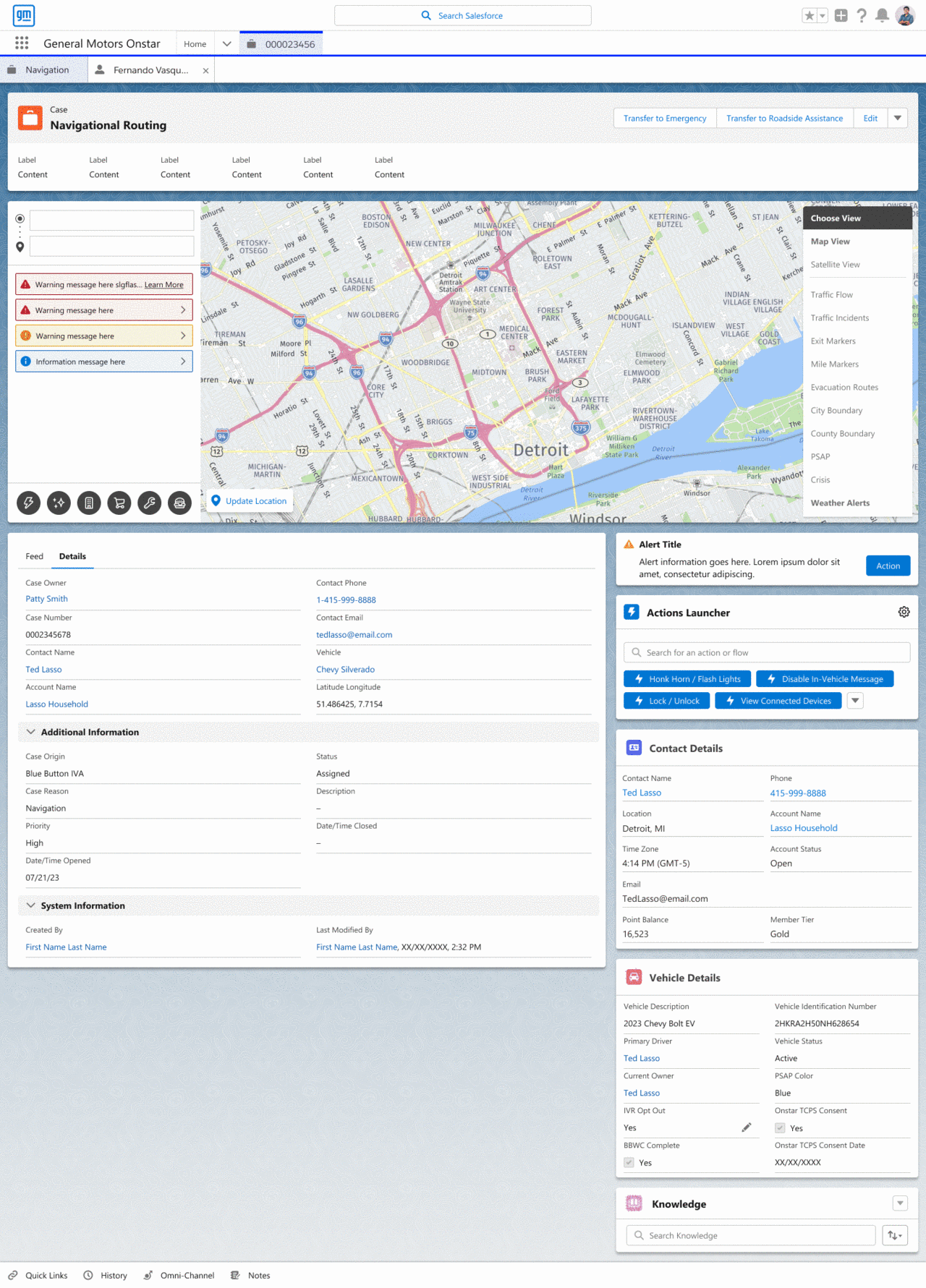
I designed Case 360 as one chronological workspace that pulled every channel and tool into a single place. The case record became a living narrative, so the advisor stayed in flow and the customer never had to repeat their story. This is where I killed the alt-tab tax that fragmented every interaction.
The right case also had to reach the right person first. Much of case assignment used to happen by hand. The team automated it, matching specialists to cases, and I designed the experience side and tuned it with advisors during the redesign.
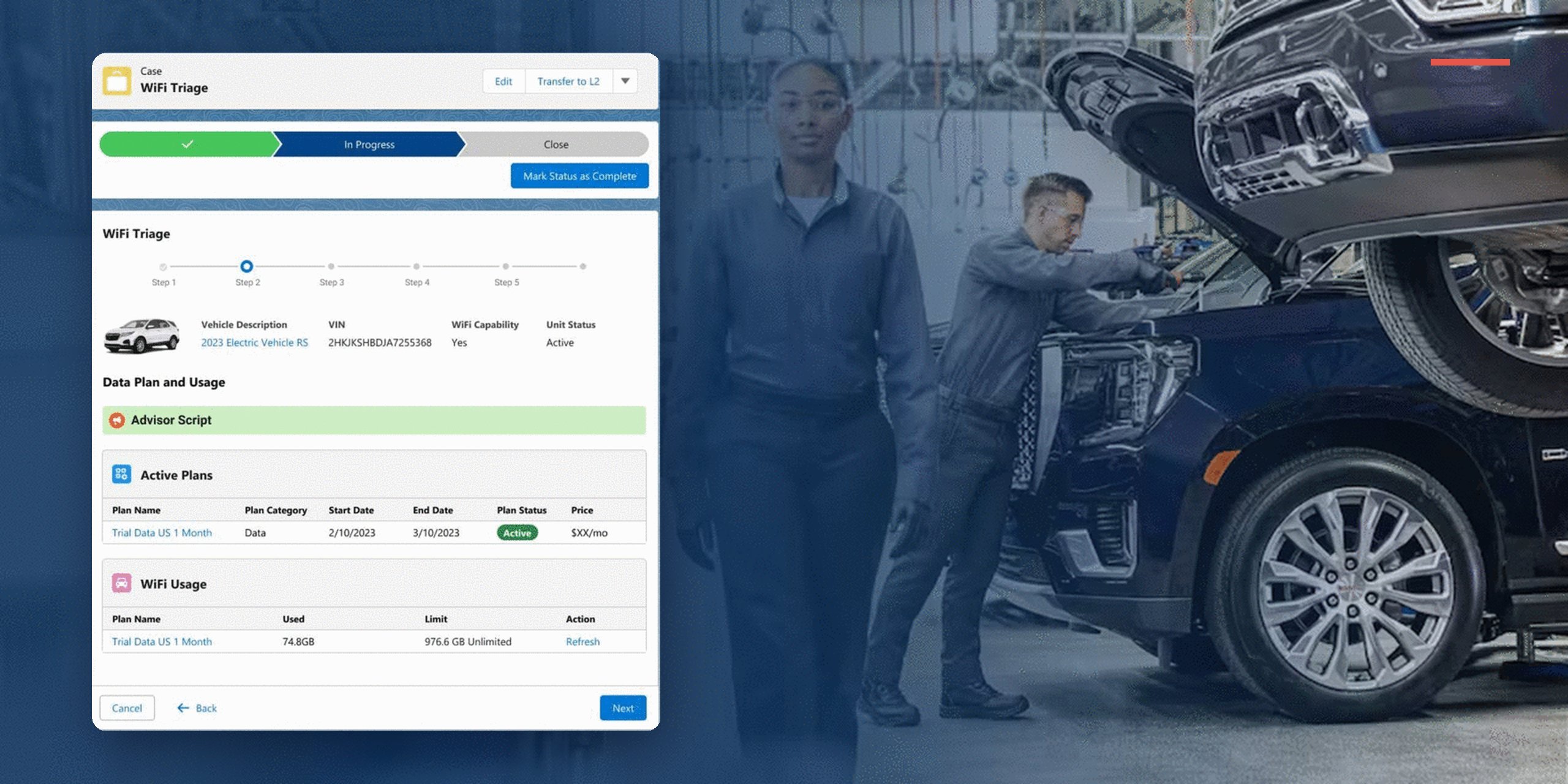
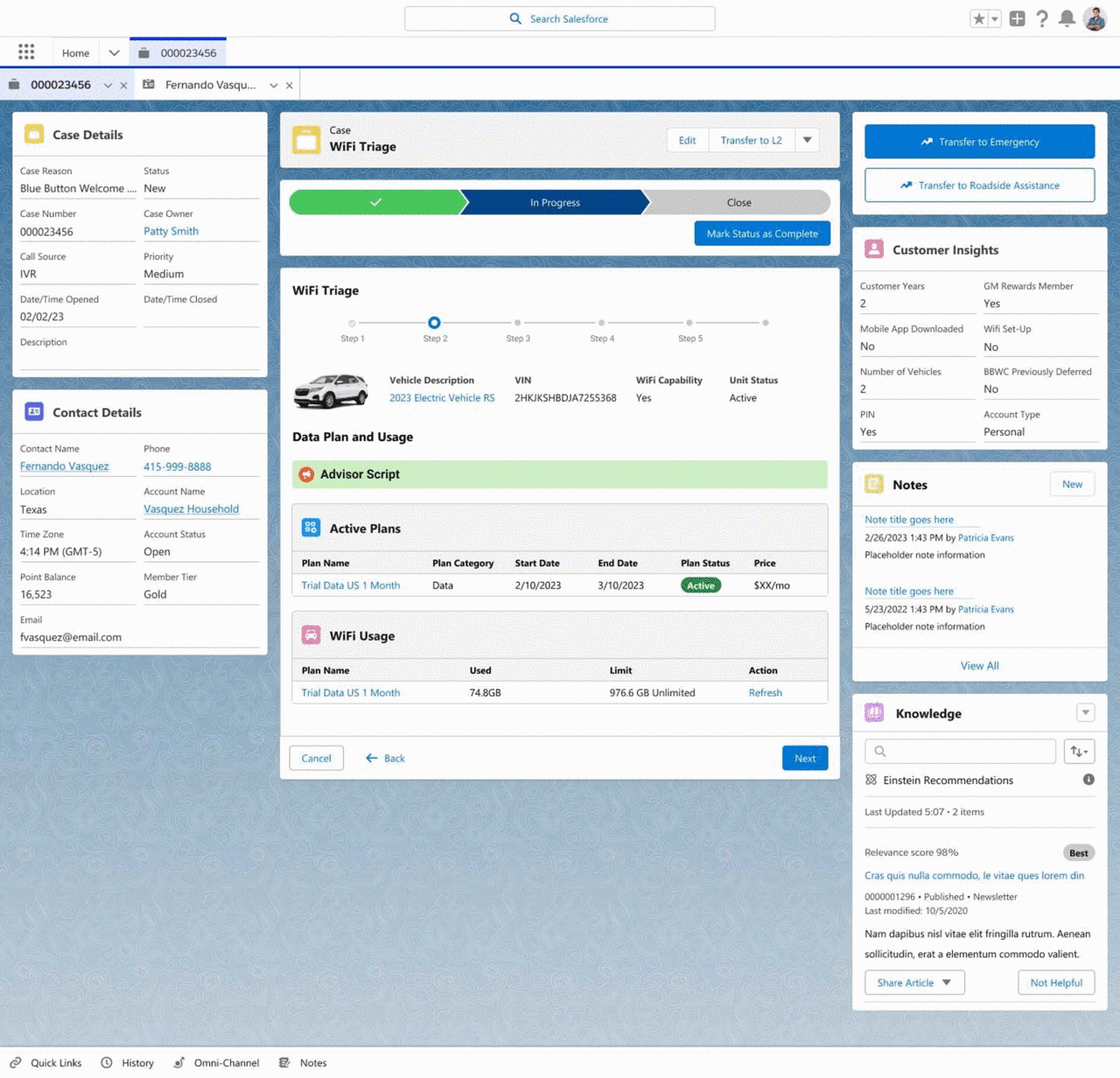
Before, advisors had to pick the right workflow from memory. Inside the workspace, I designed guided workflows: standardized resolution paths that surfaced the recommended next action in context, built on OmniStudio. The hard design problem was trust. Advisors will not follow a recommendation they cannot understand, and they will not learn from a black box. So I designed the guidance to show its reasoning: why this step, which policy applied, what comes next. That turned a rules engine into something advisors trusted and learned from, the way a senior colleague mentors a new hire. The result: fewer errors, a lighter mental load, and new advisors who ramp up faster.
The fast path showed only the lid. I made the guidance open up and show its reasoning, because advisors will not trust a black box.
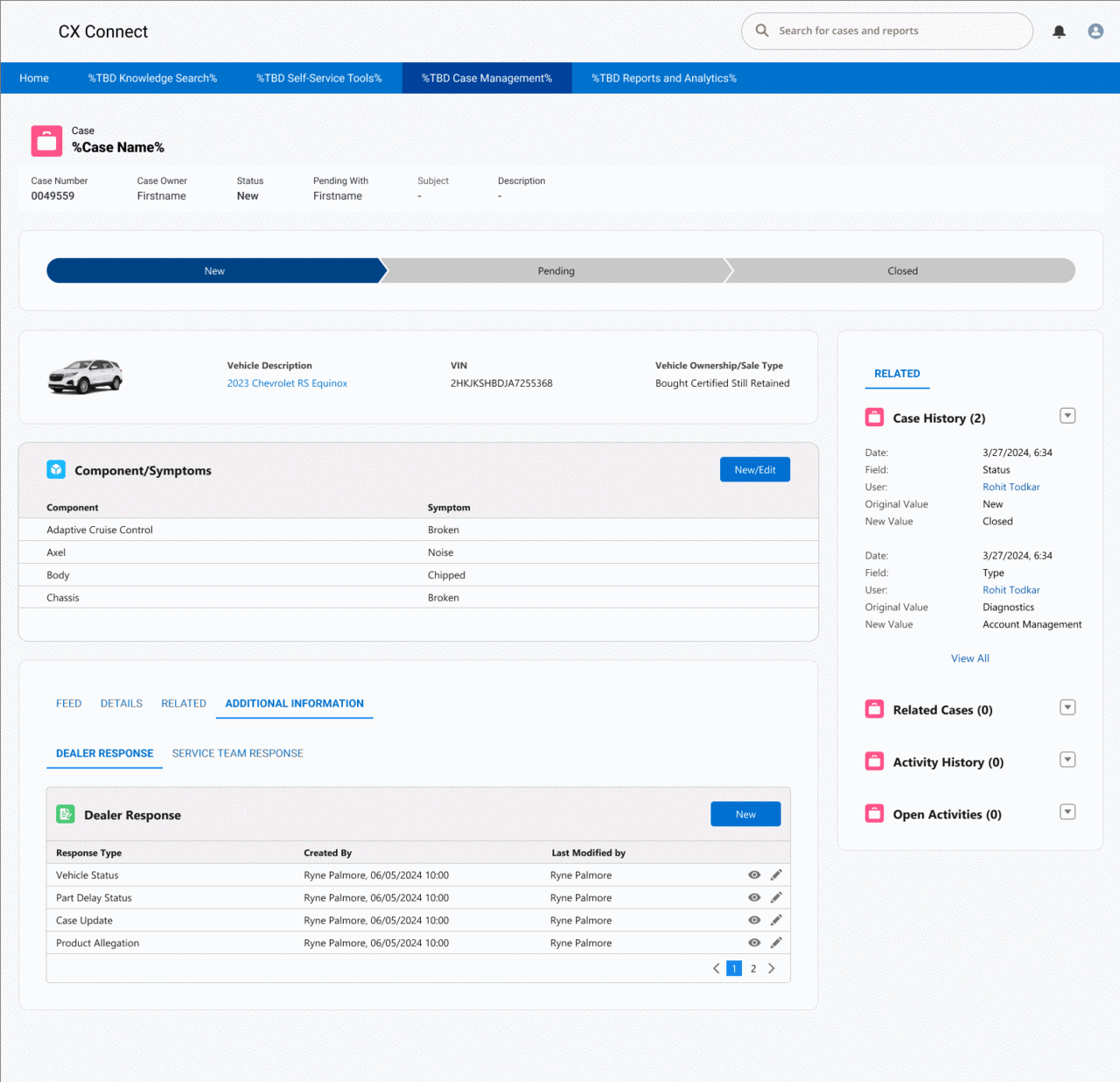
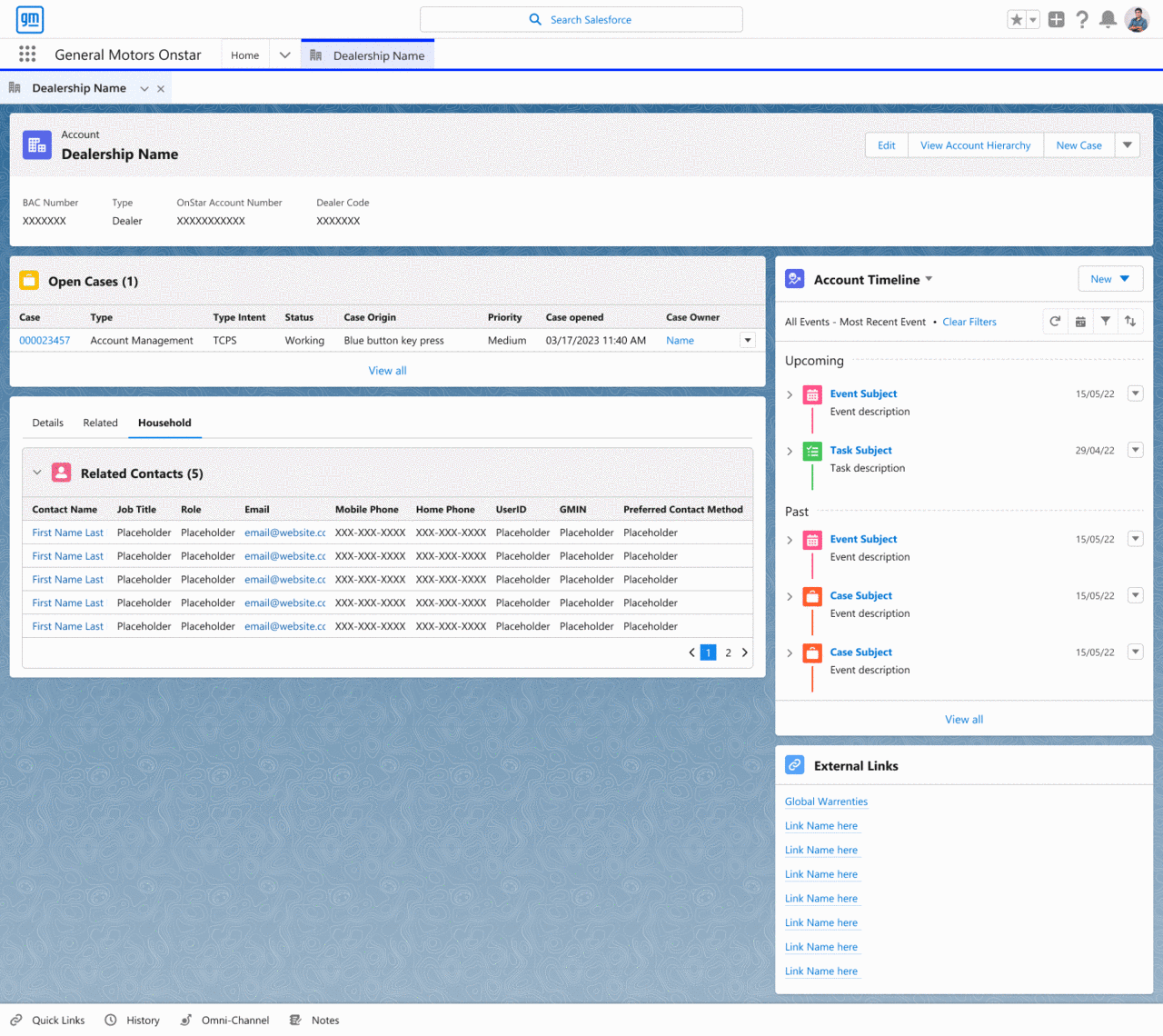
Dealers ran their own systems, often spreadsheets and homegrown tools. When a dealer passed a case to a GM advisor, like a parts request or a warranty claim, it disappeared from view, and both the dealer and the customer were left waiting. I designed the dealer portal to connect dealers to the advisor platform. Dealers could open complex cases with the right context, track downstream ownership, and receive outcomes directly. It closed the loop that used to be a black hole. Dealers got transparency, and repeat follow-ups dropped.
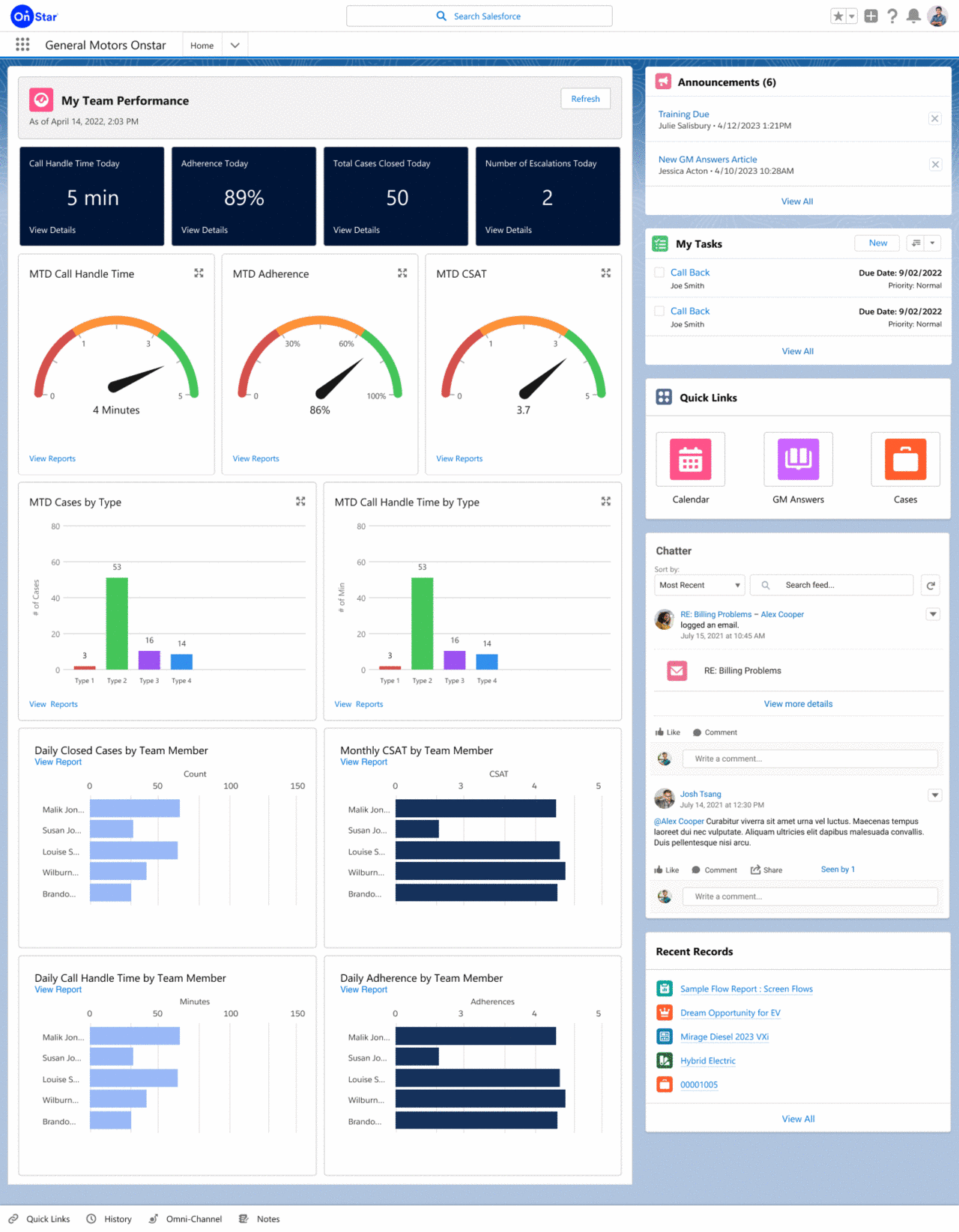
The same five principles shaped the experiences the broader team built alongside mine: a Customer and Vehicle 360 that ended the 90-second lookup at call start, a role-based advisor homepage that replaced a reactive start-of-day search with a clear next step, and context-aware emergency and location tools that brought structure to high-stress moments.
The fastest version of the guided workflows would have just told advisors what to do next: recommend the action, hide the logic, ship a clean screen. Product and engineering had fair reasons to want that: less to build and fewer pixels on an already dense workspace. I pushed the other way and held that the guidance had to show its reasoning: why this step, which policy applied, what came next. I had to defend that decision more than once.
Advisors will not follow a recommendation they cannot understand. Showing the logic paid off three ways:
In testing, advisors called this out as one of the things they valued most: they could see why the system was asking them to act.
A rules engine that hides its logic saves a few clicks and loses the one thing the platform was built to earn: trust.
Neither number came from fewer clicks alone. By giving advisors the right information at the right moment, we moved their time from hunting for data to helping the customer. The 90-second lookup disappeared, the alt-tab tax disappeared, and the mental fatigue that came with both went with it.
He owned the UX strategy for the most demanding work-streams end to end, and I never once had to worry about his delivery.
My job was to find the structure inside a messy system, so an advisor could trust the next step and a customer never had to start their story over. At this scale, that is still about people.