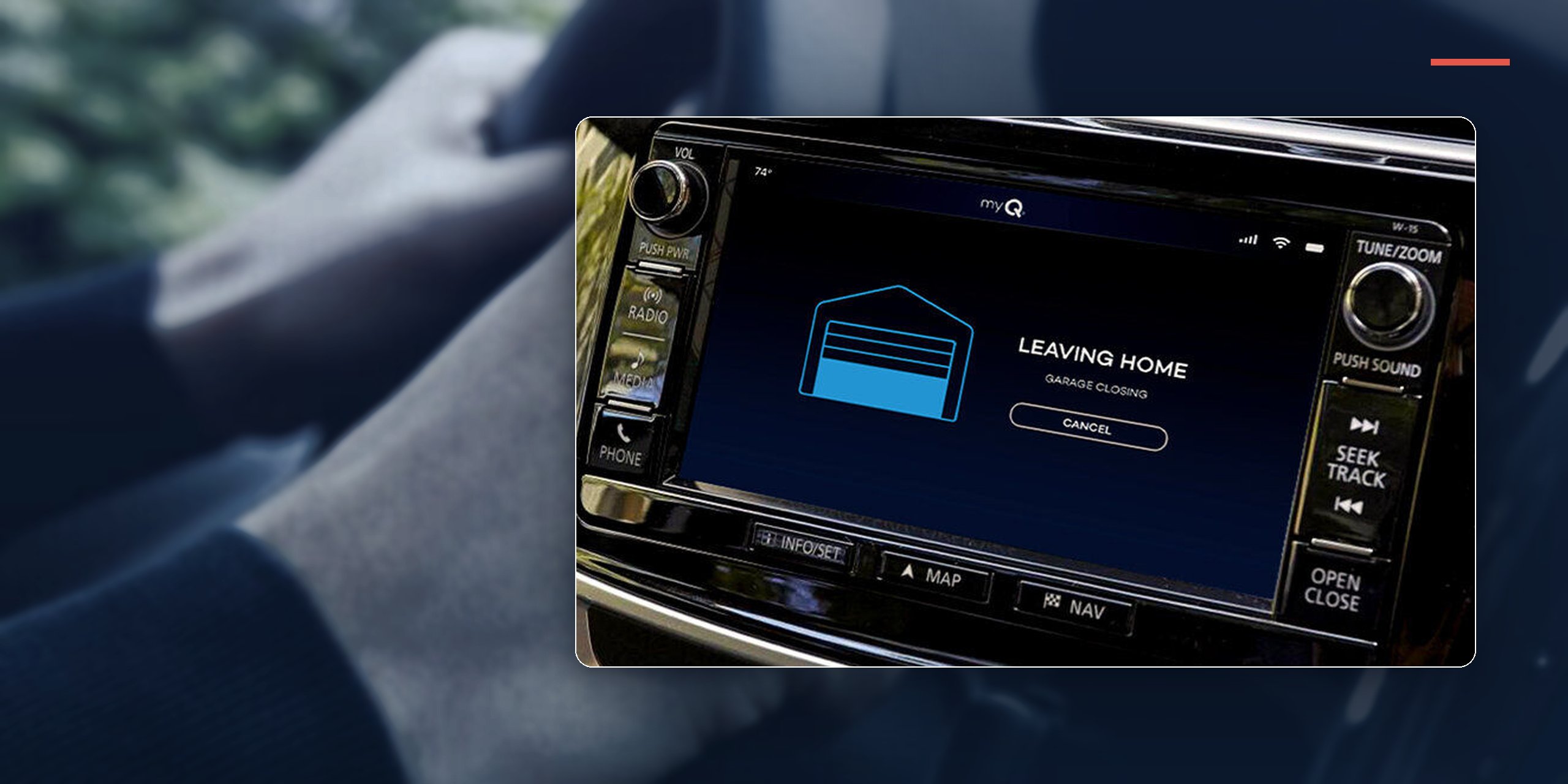
Bringing the smart home into the car with a low-distraction design, demoed at CES, and one warning built to protect the driver.
If a car already knows where it is and what state your home is in, it can act on your behalf safely, instead of making you reach for your phone.
Drivers reached for their phones to open the garage or check on home, the worst moment to ask for their attention.
Lead UX Architect. I led the UX, the flows and information architecture, and the safety design.
An in-car experience demoed at CES, and a Safe Remote Start warning a car maker could build on.
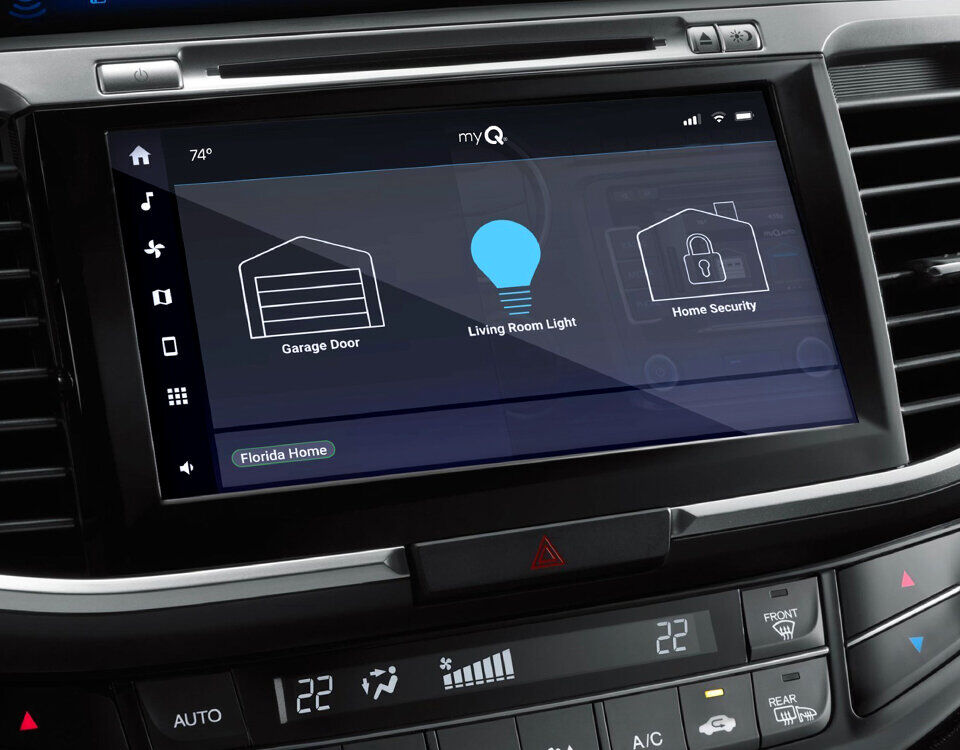
The infotainment screen and voice control the garage and smart-home devices, so the phone stays down.
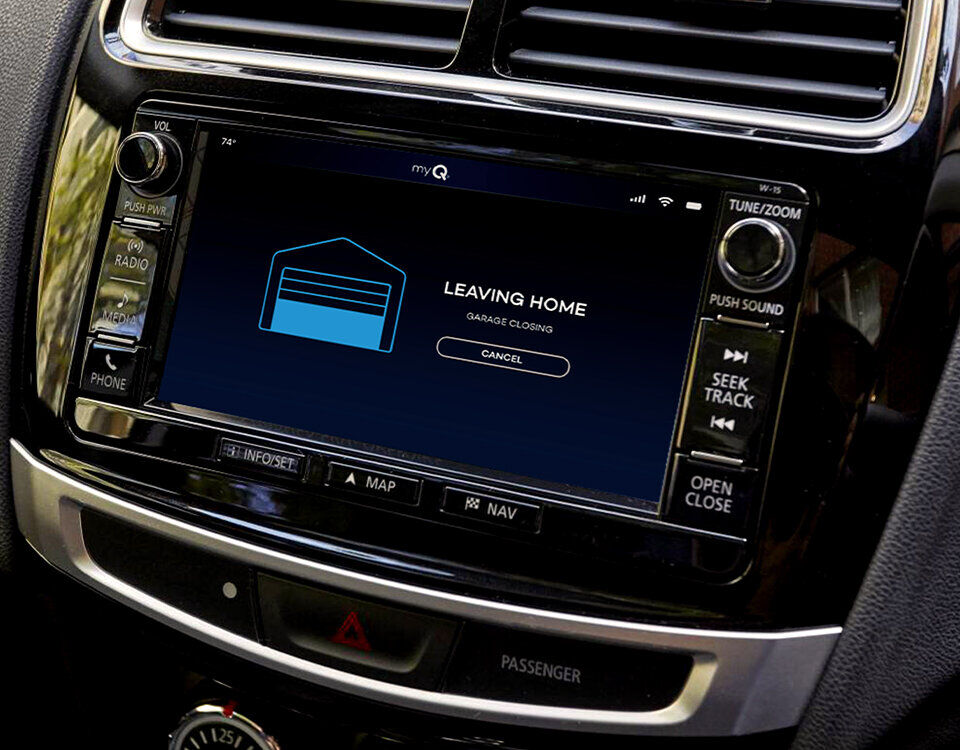
A geofence opens or closes the garage on arrival and departure, and alerts show at a glance.
If the garage is still closed, remote start warns the driver first, heading off carbon-monoxide risk.
This was an in-car myQ experience, designed to integrate with car makers' connected-service platforms and demoed at CES as a building block for more predictive driver experiences. It never shipped as a product, so its value is in the systems thinking and the safety reasoning.
The whole experience was anchored in one constraint that governs everything in a car: attention. The ideal interaction while driving is no interaction at all. So it was grounded in ergonomic research into the driver's natural field of view and reach, and every feature was measured against whether it reduced demand on the driver rather than adding to it.
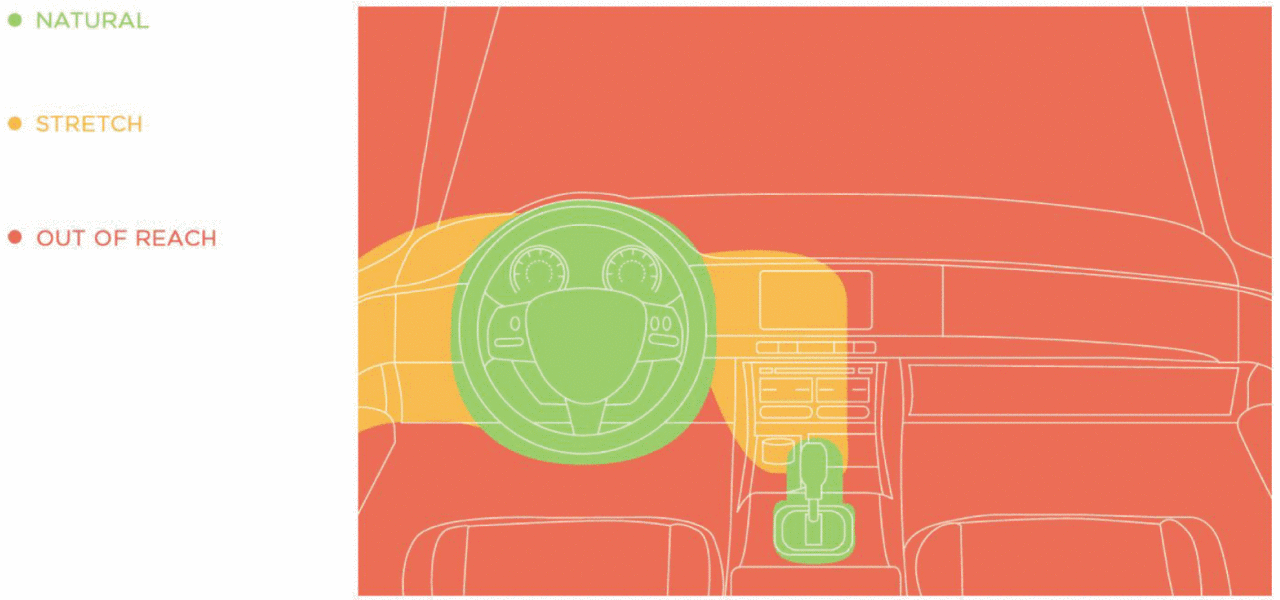
Remote, hands-free access. The vehicle's infotainment system becomes a remote for the garage door and connected smart-home devices, controllable from anywhere on the route. Because the safest in-car interaction is none at all, the design leaned on voice, designed to work through the assistants people already use.
Notifications and geofencing. The car surfaces alerts when a smart device changes state, shown at a glance, and an intelligent geofence opens or closes the garage automatically when you arrive or leave, turning a routine manual action into something the system simply handles.
The strongest idea in the design is a safety one. Because the system knows both the state of the garage door and the presence of the vehicle, a manufacturer can implement a Safe Remote Start: if a driver triggers remote start while the garage door is still closed, the system warns them, heading off the very real risk of carbon-monoxide buildup. That is the difference between connecting two devices and actually designing for the consequences of connecting them.
This project is where a few of my through-lines meet: systems that anticipate instead of react, interfaces that ask less of people in high-stakes moments, and the responsibility that comes with connecting physical things. It never shipped, but the instinct behind it, design for the consequence, not just the connection, is exactly how I approach shipped work too.